
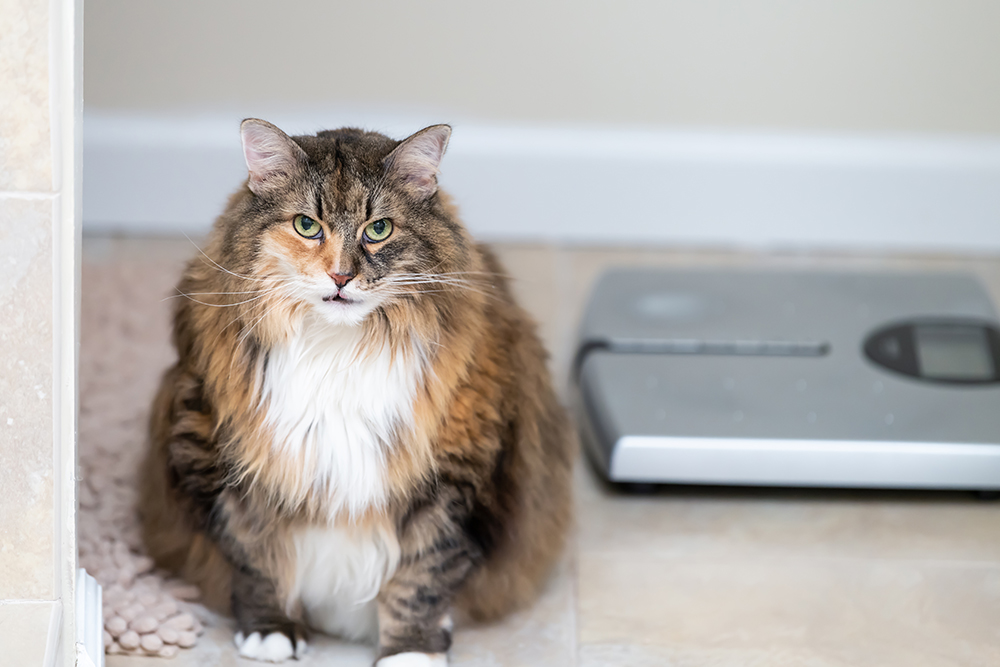
Chubby puppies and kittens are undeniably cute, but extra padding is not necessarily a sign that a growing pet is thriving. Carrying too much weight while the bones and joints are developing can put unnecessary stress on the body, and puppies and kittens who become overweight early may be more likely to carry that problem into adulthood. On the other hand, a young pet who is unusually thin, losing weight, or failing to gain as expected deserves attention too. Parasites, digestive problems, illness, inadequate nutrition, and other health concerns can all interfere with healthy growth. Body condition scoring helps us look beyond whether a puppy or kitten simply seems “big” or “small” and ask a more useful question: are they growing at a healthy rate for their individual body?
At WesVet Animal Hospital, a family-owned practice in Nashville, we keep a close eye on growth from your puppy or kitten’s very first visits. Their body can change remarkably quickly during these early months, so each wellness exam gives us another chance to track weight and body condition, make sure growth is heading in the right direction, and adjust feeding as their needs change. If your pet is getting a little too round, we can help you make small changes without compromising the nutrition they need to grow. If they are too thin or not gaining as expected, we can look for a reason rather than assuming they will catch up. Our puppy and kitten wellness plans cover those repeat exams along with vaccines and deworming, making it easier to follow that growth closely. When you bring your new puppy or kitten home, book their first visit and we will help you keep all that adorable growing headed in a healthy direction.
Body Condition in Thirty Seconds
- Body condition scoring looks at fat and muscle together, so it catches changes a bathroom scale will never show you.
- A thirty-second hands-on check at home, once a month, tells you more than the number does: ribs, waist, and belly tuck.
- Portion control does most of the work in weight loss, and exercise is what protects the muscle underneath.
- Weight that changes without a change at the food bowl is a medical question, and bloodwork usually answers it.
What Does Healthy Body Condition Look Like While They’re Still Growing?
Lean, even at this age. A healthy puppy or kitten has ribs that are easy to feel under light pressure, a waist you can see from above, and steady gains week over week rather than sudden rounding. Growing should look like getting longer and taller, not wider, and the roly-poly stage families expect is mostly a myth worth retiring.
The stakes are highest for large and giant breed puppies. Extra weight during the months when growth plates are open and joints are still forming pushes a developing skeleton toward hip dysplasia, elbow disease, and other orthopedic problems that no surgery fully undoes later. A lean Lab puppy is not being deprived; puppies raised lean develop less arthritis and stay sound years longer than their heavier littermates. For these breeds the goal is slow, steady growth on a large-breed puppy formula, never growth as fast as the bag allows.
The spay or neuter visit is where young pets most often start to drift. Metabolic needs drop noticeably after the surgery, often by a quarter or more, while appetite stays exactly where it was, so the scoop that kept a five-month-old lean quietly builds fat on a seven-month-old. Plan on trimming portions after surgery and rechecking body condition a month later, and we’ll help you land on the new amount rather than guessing.
One “chubby” look doesn’t belong in this conversation at all. A puppy or kitten with a round, tight belly but ribs, spine, and hips that are easy to feel isn’t carrying baby fat; that combination is the classic picture of intestinal parasites, a wormy belly on a body that is actually underweight. It’s exactly why deworming is built into those early visits, and why a pot-bellied baby needs a fecal check, not a diet.
Which Pets Are Most Likely to Drift Out of a Healthy Weight?
Neutered pets, food-motivated breeds, indoor cats with a bowl that’s never empty, and senior pets with arthritis pain are the ones most likely to gain, while running too thin shows up in growing puppies and kittens with parasites, hard-working dogs, and senior cats. Most of this is circumstance rather than character: appetite doesn’t drop after a spay or neuter even though calorie needs do.
| More likely to carry extra weight | More likely to run underweight |
|---|---|
| Neutered dogs and cats, whose calorie needs drop after surgery | Puppies and kittens carrying intestinal parasites |
| Food-driven breeds such as Labs, Beagles, Pugs, and Dachshunds | Working, sporting, and highly active dogs in season |
| Indoor cats with constant access to a full bowl | Senior cats, who lose lean muscle with age |
| Seniors with arthritis pain, where every step hurts | Pets with dental pain who eat less than they want to |
| Homes where several pets share bowls and treats | Pets with chronic kidney, thyroid, or digestive disease |
Why Doesn’t the Number on the Scale Tell You Much?
Weight is one number, and it can hold steady while everything underneath it changes. A dog who weighs the same at eight as she did at four may have quietly traded muscle mass for fat, and the scale reports none of it.
Two dogs of the same breed can hit an identical number and be in completely different shape, since muscle is denser than fat and the fitter one may even read heavier. A heavy-set build that wins ribbons in the show ring is also a lot of load for one set of hips to carry into old age.
The more useful questions are behavioral. Does your dog move well the morning after a long walk? Can your cat still land on the counter she used to clear without thinking? Body condition is part of every one of our routine wellness exams, which is how a slow drift gets caught while it’s still a conversation and not a diagnosis.
How Do I Check My Pet’s Body Condition at Home?
The check takes about thirty seconds and relies on your hands more than your eyes. Body condition scoring runs on a nine-point scale, where a 4 or 5 describes a pet whose ribs are easy to feel under light pressure, whose waist shows from above, and whose belly tucks up from the side.
Here’s the sequence we use, and it works just as well on your living room floor:
- From above: Stand over your pet and look for an hourglass. There should be a visible narrowing behind the ribs before the hips.
- From the side: The belly should slope upward from the back of the ribcage toward the hind legs rather than running flat or sagging.
- Hands on the ribs: Flatten your palms and run them along the chest. Think about the back of your own hand, where you can feel the bones under a thin layer of padding.
- Hands on the spine and hips: These bones should be easy to find, but not sharp or prominent.
| Score | What you feel | What you see |
|---|---|---|
| 1 to 3, underweight | Ribs, spine, and hip bones stand out with almost no covering | Deep tuck, obvious bony outline, muscle wasting over the shoulders |
| 4 to 5, ideal | Ribs easy to find under a thin layer of fat | Clear waist from above, belly tucking up from the side |
| 6 to 7, overweight | Firm pressure needed to locate the ribs | Waist blurred or gone, belly running level instead of tucked |
| 8 to 9, obese | Ribs difficult to find under heavy padding | Rounded from above, sagging abdomen, fat deposits over the lower back and tail base |
Do this once a month and write the score down. Long coats hide a surprising amount, so a Golden or a Maine Coon needs the hands-on version even more than a smooth-coated pet does. One shape doesn’t belong on the chart at all: a belly that turns round quickly while the ribs stay easy to find isn’t fat, and fluid or an enlarged organ behind it needs an exam soon. If what you’re feeling doesn’t match what you’re seeing, bring your pet in and we’ll score them together so you know exactly what a 5 feels like on your own dog or cat.
What Does Extra Weight Do to Your Pet’s Body?
Extra fat isn’t quiet padding. It behaves like active tissue, fueling low-grade inflammation while loading joints, discs, and the heart all at once. Heavy dogs and cats deal with more arthritis, more breathing trouble, riskier anesthesia, and a longer list of problems that leaner pets simply don’t develop as often.
- Joints and spine: Every extra pound presses down on the spine, and intervertebral disc disease hits long-backed breeds like Dachshunds and Corgis hardest, sometimes showing up as a dog who suddenly cannot use his back legs. Arthritis also arrives earlier, and sore hips make movement less appealing, which adds pounds, which makes the joint worse.
- Blood sugar and hormones: Extra fat changes how the body responds to insulin, and diabetes in an overweight cat usually means twice-daily injections, glucose monitoring, and a feeding routine the whole household has to follow. Pancreatitis is also more common.
- Heart, airway, and heat: Carrying extra weight raises blood pressure and makes the heart work harder even at rest. Flat-faced breeds have the least airway to spare, so a heavy Frenchie or Persian overheats faster and struggles more on a humid Nashville afternoon.
- Bladder and anesthesia: Urinary stones turn up more often in heavier pets, who tend to move less and drink less. Sedation carries more risk too, since body fat changes how drugs distribute and makes breathing support harder to manage.
- Lifespan: The real cost is measured in years: obesity and lifespan pull in opposite directions, and dogs kept lean live measurably longer than their heavier littermates.
Nobody hands over a fifth training treat out of carelessness. Love just tends to show up as food. But managing an obesity-related illness over years asks far more of a household than prevention ever does, whether that’s insulin twice a day, long-term pain medication, or spinal surgery that arrives with no warning at all.
What If My Pet Is Too Thin?
An underweight pet isn’t simply a slimmer version of a healthy one. Thin dogs and cats have less immune reserve when something contagious comes through, less insulation on a cold Tennessee night, and less muscle holding them steady on stairs, and they heal noticeably slower after an illness or an injury.
Seniors, dogs with heavy workloads, and pets with chronic disease benefit most from preventive care that sets a baseline weight early and rechecks it on a schedule. A five percent drop means something very different when we know where your pet started.
How Much Food Does My Pet Really Need?
The feeding guide on the bag is a starting point built for an average pet, not for yours. Portions should be built around the weight your pet should be, not the weight your pet is today, and a calorie calculator turns that target into a daily number you can measure into a bowl.
Measuring means a kitchen scale or a proper measuring cup, not the mug that lives in the bin. Count everything that goes in: dental chews, training treats, the crust of toast, the peanut butter hiding the pill. Treats belong under about ten percent of the daily total, which leaves plenty of room to spoil somebody.
Cats need a slower approach than dogs, because dropping calories too fast can trigger hepatic lipidosis, a liver disease that turns a diet plan into a hospital stay. Never withhold food from a cat to speed things along, and call us if a cat on a diet stops eating for more than a day.
Is a Prescription Weight Diet Better Than a “Light” Bag From the Store?
The two bags on the shelf look like they’re doing the same job. Choosing the right food comes down to what has actually been tested, since prescription weight-loss diets go through feeding trials proving they take off fat while protecting lean muscle, and an over-the-counter light bag simply has less fat in it.
For a pet with a lot to lose, or one already managing arthritis or a metabolic condition, that predictability is worth having. The higher protein and fiber also help, since a hungry dog who feels full is a dog whose family sticks with the plan. These diets need veterinary authorization, and we can sort that out at a visit for weight management and nutrition guidance.
What Works for Weight Loss That Lasts?
Weight loss that lasts is steady rather than dramatic: measured meals, movement that builds week by week, and a household that agrees on the rules. Crash diets backfire, because the weight returns and it comes back as fat with the muscle missing.
- Dogs: Dog weight loss works best as measured meals on a set schedule paired with walks that get a little longer each week.
- Cats: Cat weight loss depends on making food take effort, with portions split into puzzle feeders, kibble scattered across a few rooms, and a wand toy session before dinner instead of a bowl that never empties.
- Treats: Green beans, baby carrots, and air-popped popcorn stand in nicely for biscuits with most dogs. The simplest trick: measure the whole day’s food into a container each morning, and every treat comes out of that container.
- Tracking: Weigh in every two to four weeks and write the number down. If it hasn’t moved in a month, the portion needs adjusting, not more willpower from everyone involved.
When Is Weight Change a Symptom Instead of a Habit?
A pet whose weight shifts without any change at the bowl deserves bloodwork before a diet plan. Hypothyroidism slows a dog’s metabolism enough to drive steady weight gain alongside a dull coat, low energy, and skin that never quite settles.
In dogs, Cushing’s disease is the other classic gainer, though it distributes the weight strangely: a pot-bellied outline, thinning fur along the flanks, and a dog drinking and urinating far more than usual. Canine diabetes usually runs the opposite way, stripping pounds off a dog whose appetite has never been better.
On the other end, feline hyperthyroidism strips weight off an older cat who is eating more than ever, usually with a louder voice, a racing heart, and restless nights. Chronic kidney disease takes a quieter path, with gradual muscle loss and a fading appetite. Cancer belongs on the list too, particularly when the loss is unexplained and steady. Treating the underlying condition usually has to come first, and once it’s managed, healthy weight change becomes possible again.
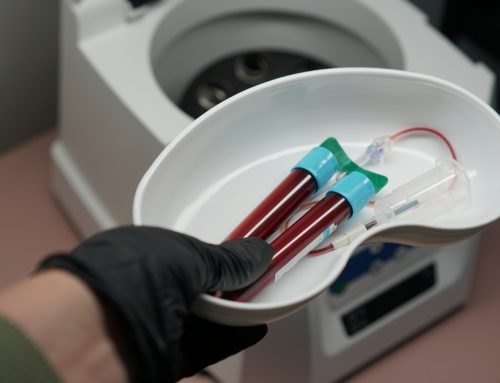
A complete blood count, chemistry panel, and urinalysis are the usual starting point. Annual screening bloodwork is worth doing even when everything looks fine, because a normal baseline is what makes next year’s numbers mean something.
How Often Should Body Condition Be Checked as Pets Get Older?
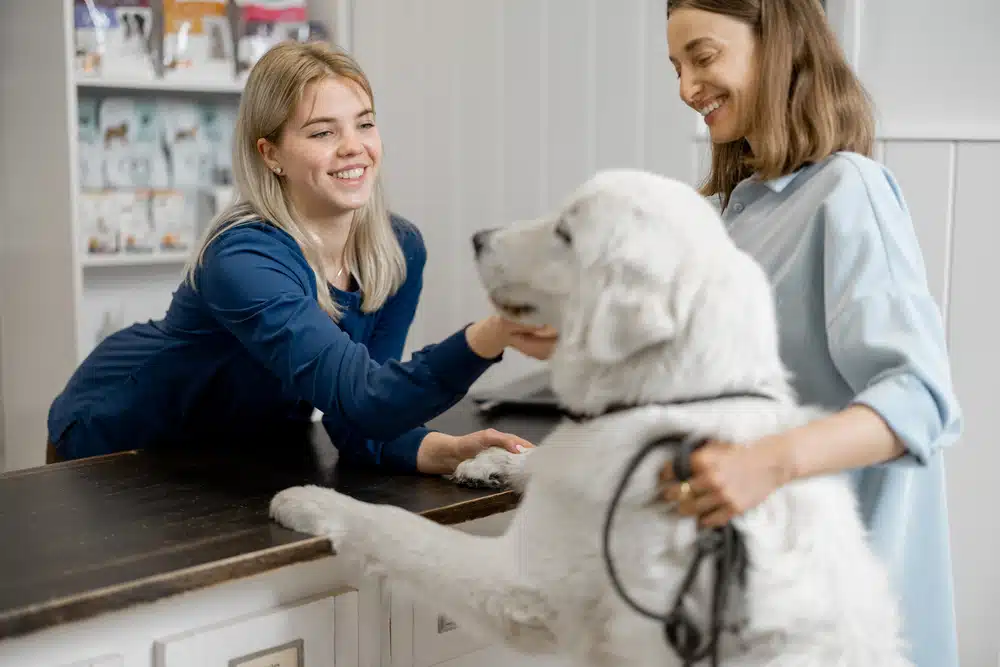
Score at home about once a month and let us score at every visit, because what counts as ideal keeps moving. Puppies and kittens are judged on growth rate, adults on holding steady, and seniors on muscle, since an older pet can lose lean mass while body fat stays put or climbs. Six-month exams catch those trends for adult dogs and cats before they compound.
Portions, diet choice, and activity goals all get revised as life changes: a new home, a spay or neuter, an arthritis diagnosis, a slower winter. Our wellness plan check-ins build that recheck rhythm in, so nobody has to remember to ask.
Pet Weight and Body Condition: The Questions We Hear Most
My dog acts starving all the time. Am I feeding him enough?
Begging is behavior, not a hunger gauge, and some breeds are wired to act famished at a healthy weight. Score him with your hands before you trust the performance. If the ribs are hard to find, he’s getting plenty. A higher-fiber diet and splitting the same amount into three meals both help him feel fuller. Ravenous appetite paired with actual weight loss is different, and that one needs bloodwork.
My senior cat is getting thinner. Isn’t that just age?
Older cats do lose muscle with age, but weight loss in a senior cat usually has a findable cause behind it. Hyperthyroidism, kidney disease, diabetes, painful teeth, and cancer all present this way, often before anything else looks wrong. A cat who has dropped even a pound from a ten-pound frame has lost ten percent of herself. Bring her in for an exam and lab work rather than watching another few months.
Do I have to weigh food, or is a measuring cup fine?
A kitchen scale is the most accurate option and takes about the same time once it’s on the counter. A measuring cup works if you level it and use the same one every day, though scoop-to-scoop variation can easily reach twenty percent. For small dogs and cats, that gap is the difference between losing weight and standing still. Whoever feeds breakfast should use the same method as whoever feeds dinner.
Come Talk to Us About Your Pet’s Weight, Whenever You’re Ready
Better body condition shows up in ordinary moments long before it shows up on paper: an easier jump onto the bed, a walk that doesn’t end with a limp, mornings that start without stiffness. Saying no to a hopeful face at dinner is hard, and nobody at WesVet Animal Hospital is going to make you feel bad about the treats.
Bring your dog or cat to our team, and we’ll put hands on them, give you a score, set a realistic target, and build a plan around the household you have rather than an ideal one. Request a visit whenever you’re ready to start, and reach out any time between visits if progress stalls.





Leave A Comment